
Caricamento… / Loading…
external walls, protection of photovoltaic systems.
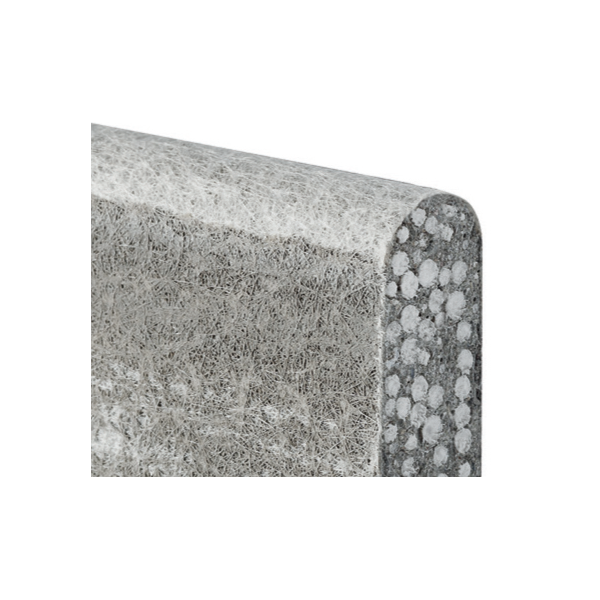
UNIPAN® boards are produced in a continuous cycle and obtained from a mix of Portland cement and aggregates, with both faces, front and back, in glass fibre mesh with a polymer coating. The longitudinal edges are tapered, with a smooth finish, and are reinforced thanks to EDGETECH® technology. The ends (head edges) are square-cut. They are suitable for building external walls or in places requiring products with high resistance to water and moisture and high impact resistance.
the UNIPAN® boards are applied so that ends and edges are touching, but without forcing. Lay the boards horizontally, i.e. so that the longitudinal edge is perpendicular to the framing. The end joints of the boards must always be staggered. Fix the UNIPAN® boards to the supporting framing with UNIVIS screws. Proceed with the screwing starting from the centre of the board and continuing towards the ends and the edges. When driving the UNIVIS screws, hold the UNIPAN® boards firmly in contact with the supporting structure. Space the UNIVIS screws at a maximum of 200 mm centres for walls, and 150 mm for ceilings. The UNIVIS screws must be driven at a distance of between 1 and 2 cm along the longitudinal edges and the ends. Adjust the screwing so that the base of the head is flush with the surface of the UNIPAN® boards, so as to obtain a firm anchorage of the panel to the framing. Do not overdrive or insert the fixings too deeply. The UNIPAN® boards can be cut to size using a cutter or a handsaw and a straightedge. A power saw may be used, provided it is fitted with a dust collection device. In any case, the instructions contained in the specific certifications must be observed, in relation to the types adopted.
The contents of this page are summarised from the official technical data sheet PDF, which remains the reference document.