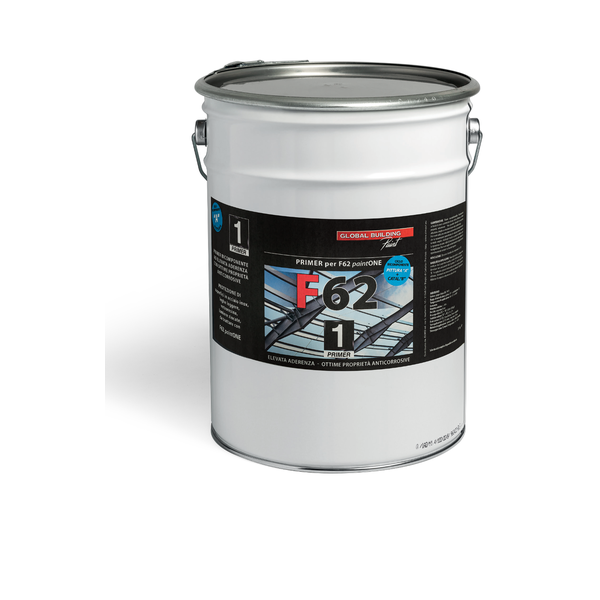
- Characteristics
- Two-component zinc phosphate epoxy-polyamide primer characterised by high adhesion and excellent anticorrosive properties. It can be used both on new surfaces and in maintenance work, making it easy to build up protective systems. It can be applied directly on suitably treated galvanised substrates and on organic zinc-rich primer.
- Colour
- light grey RAL 7035.
- Substrate preparation
- Good, correct preparation of the substrate is a guarantee of quality for the durability of the coating. For specific applications on: - HOT-DIP GALVANISED STEEL the galvanised sheet must be passivated by leaving the items exposed to the weather for at least two to three months; then proceed with light sanding to remove the surface oxidation patina that has formed and degrease the surfaces with Nitro thinner. Alternatively, light silica sandblasting is recommended. -- NEW STEEL the surface must be clean and dry, free from oils, greases and other contaminants. Sa2,5 sandblasting ensures the best anticorrosive performance. - SURFACES TREATED WITH SHOP PRIMER if intact, clean and free from dirt, oil, grease and salts, and dry, it can be painted; otherwise carry out the preparation as for coated surfaces. - COATED SURFACES With primer: if clean and free from dirt, oil, grease and salts, and dry, and application falls within the maximum overcoating time of the primer, it can be painted. If cleaning is necessary, carry out high-pressure washing to grade Wa 2 (surface free from oil, grease, salts, dirt). With complete coating: if compatible, intact and not chalking, clean off oil and grease with detergents, then carry out surface sanding followed by high-pressure water washing to remove dust and salts. Rusted coating: carry out St2 or St3 mechanical preparation followed by high-pressure water washing to remove oil, grease, dust and salts, or Sa2 or Sa2,5 sandblasting. Localised maintenance: carry out St2 or St3 mechanical preparation followed by high-pressure water washing to remove oil, grease, dust and salts, or Sa2 or Sa2, ½ sandblasting. Round off the edges of the well-adhered paint and restore the system to its original layers and thicknesses.